
Small rooms can have just as much personality, comfort, and elegance as larger spaces. In many cases, working with less square footage actually encourages more thoughtful decorating because every piece needs to earn its place.
Across Ottawa, homeowners are finding creative ways to make compact living rooms, bedrooms, entryways, dining areas, and home offices feel more spacious without sacrificing character. Rather than trying to squeeze more furniture into a room, the focus is shifting toward smarter layouts, carefully selected home decor, better lighting, and decorative details that make the space feel intentional.
This is particularly useful in homes where certain rooms naturally have smaller proportions. A compact room does not have to feel cramped or unfinished. With the right styling decisions, it can become one of the most memorable spaces in the home.
The secret is not necessarily making a small room look enormous.
It is making every part of that room feel like it belongs.
Start With What the Room Actually Needs
Before decorating a smaller space, it helps to think about how the room will actually be used.
A common mistake is trying to make a small room perform too many functions at once. When several pieces of furniture are added without a clear purpose, the room can quickly begin to feel crowded.
Instead, homeowners can begin by identifying the room’s primary function.
Is it mainly a place to relax? Is it a guest bedroom that also needs a small workspace? Is it an entryway that needs practical storage? Is it a dining area used mostly for family meals?
Once the purpose is clear, decorating becomes much easier.
Every furniture piece and decorative accent can then contribute to that purpose rather than simply occupying available space.
Give Furniture a Little Breathing Room
It may seem logical to push every piece of furniture against the walls when decorating a small room. Sometimes that works, but it is not always the best solution.
A little breathing room can actually make furniture feel lighter.
Even a small amount of space around an accent chair, console, or side table can create better visual separation between pieces. Instead of appearing packed together, individual elements become easier to appreciate.
The same principle applies to decorative objects.
Not every tabletop needs to be completely covered. Not every shelf needs an accessory. Not every corner needs furniture.
Leaving intentional open space can make the entire room feel calmer and more sophisticated.
Use Mirrors to Create Depth
Mirrors are particularly effective in smaller Ottawa homes because they can completely change the perception of a room without taking up valuable floor space.
A well-positioned mirror can reflect:
- Natural light
- Artwork
- Decorative lighting
- Greenery
- Another attractive area of the room
This reflection creates additional visual depth.
A larger mirror can also become a statement piece on its own. Instead of adding several smaller decorations to a wall, one beautifully framed mirror can provide function, style, and visual impact at the same time.
Entryways, dining areas, bedrooms, and smaller living rooms can all benefit from this approach.
Choose Fewer Pieces With More Presence
Small rooms do not necessarily need small decor.
In fact, filling a compact room with dozens of tiny decorative objects can sometimes make it appear even smaller.
A more effective approach is choosing fewer pieces with greater visual presence.
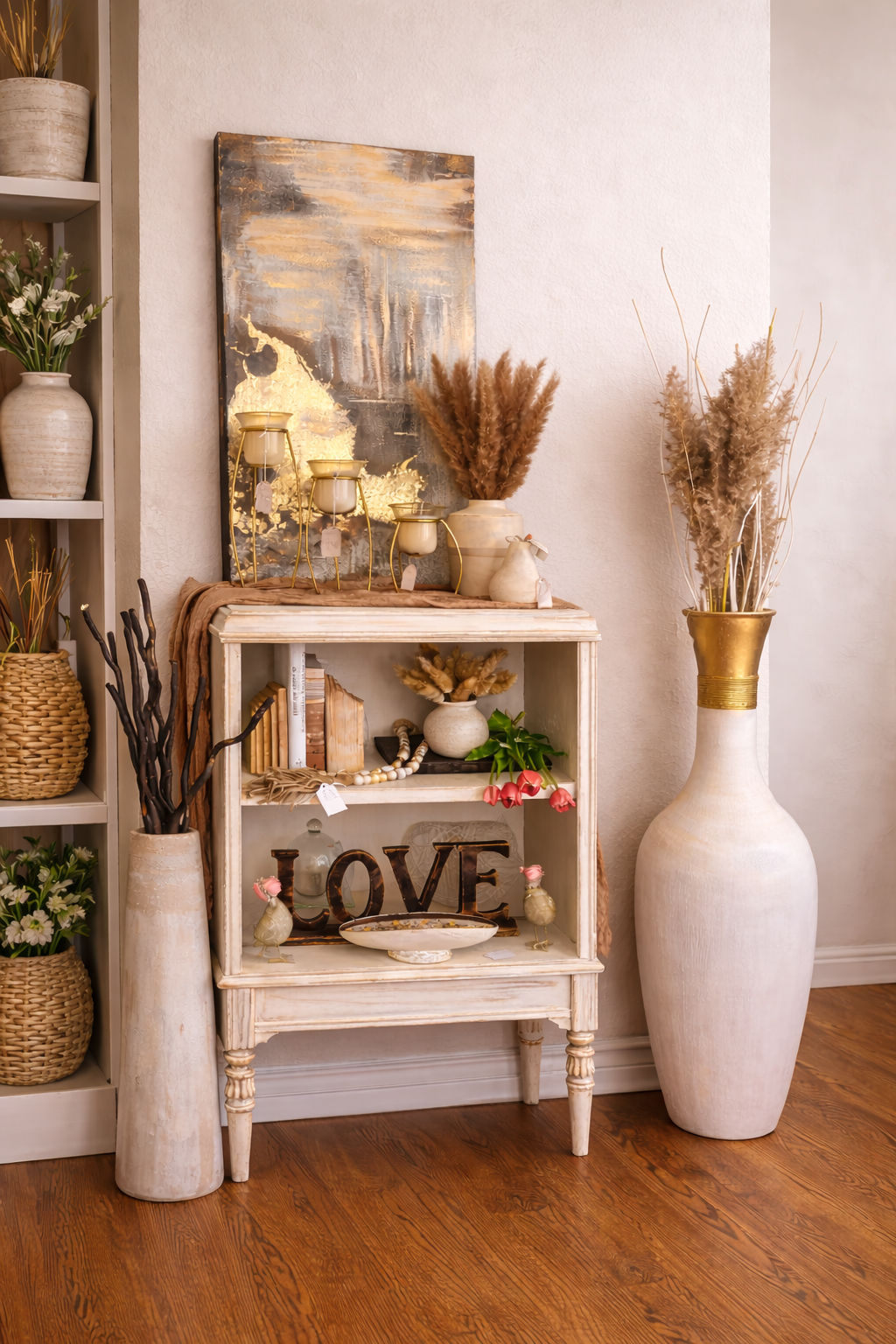
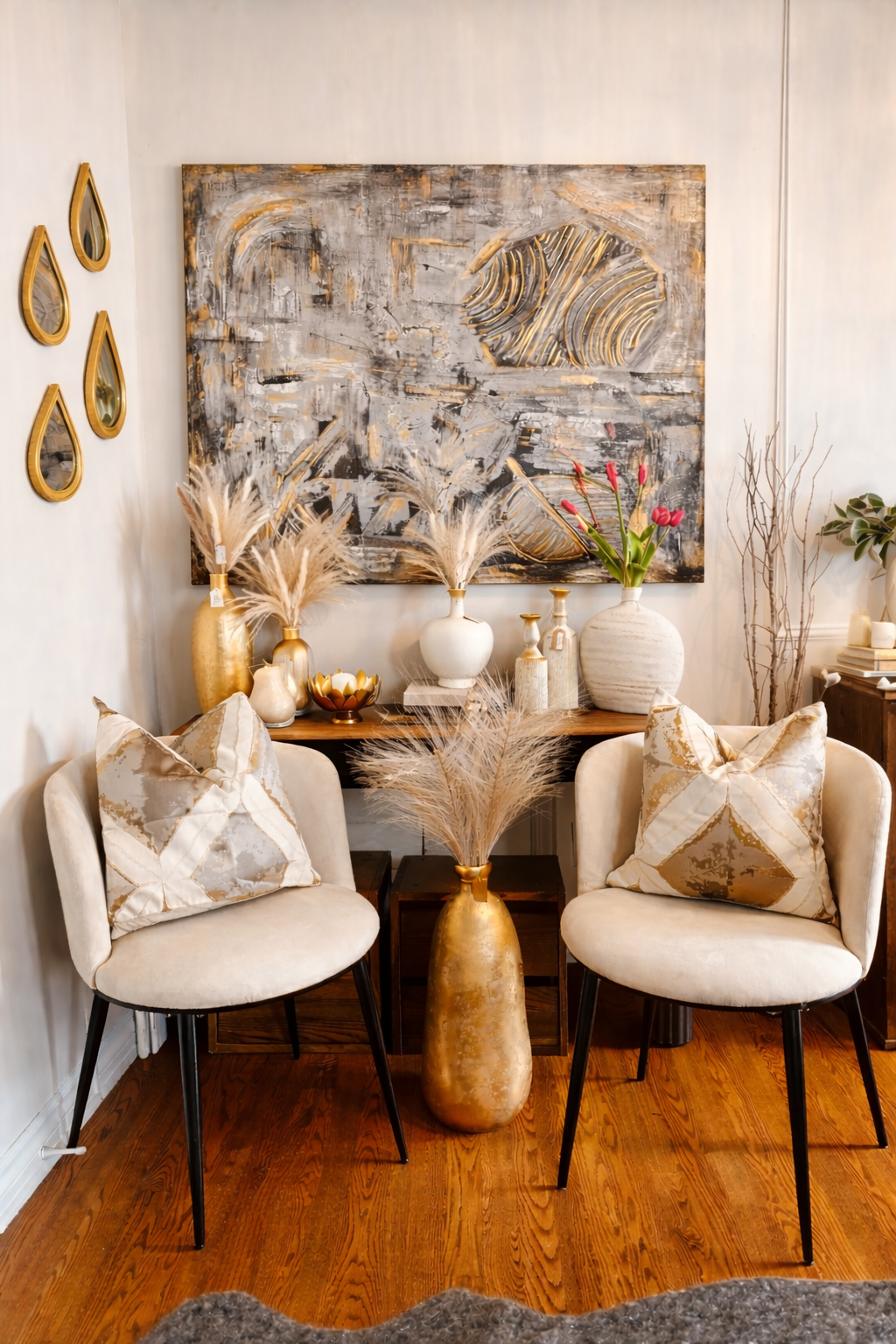
For example, instead of several small wall decorations, consider one substantial piece of artwork. Instead of multiple small accessories in an empty corner, a tall decorative floor vase may be enough.
The same idea works with:
- Sculptural objects
- Decorative mirrors
- Table lamps
- Large planters
- Statement bowls
- Textured artwork
A few intentional pieces give the eye somewhere to focus.
That can make the entire room feel more organized and complete.
Take Advantage of Vertical Space
When floor space is limited, walls become incredibly valuable.
Drawing attention upward can also make a room feel taller.
Ottawa homeowners can use vertical space through tall mirrors, artwork, shelving, floor lamps, long curtains, or decorative arrangements that naturally guide the eye upward.
A tall floor vase with decorative branches, for example, can add significant visual interest while occupying very little floor area.
Artwork can achieve something similar.
Instead of clustering everything around furniture height, introducing visual elements higher on the wall helps use more of the room’s available dimensions.
Let Natural Light Become Part of the Design
Natural light can make even a compact room feel open and refreshing.
Heavy window treatments or furniture placed directly in front of windows can reduce that effect.
When possible, homeowners can arrange furniture so natural light moves freely through the room. Lighter window treatments can soften windows without making them feel visually heavy.
Mirrors can then help distribute that light further into the space.
During Ottawa’s darker winter months, maximizing natural daylight can make rooms feel especially welcoming.
Rather than treating windows as something that simply needs covering, they can become part of the overall design.
Layer the Lighting
Natural light is important, but smaller rooms also benefit enormously from thoughtful lighting after sunset.
One bright ceiling fixture can make a compact room feel flat.
Several softer light sources create dimension.
Consider combining a ceiling fixture with a floor lamp or table lamp. A small accent lamp on a console or side table can create another warm pocket of light.
The goal is to create different levels of illumination rather than flooding the entire room from one direction.
Layered lighting can make a room feel warmer, softer, and surprisingly spacious because it highlights different areas rather than treating the space as one flat surface.
Keep the Color Story Connected
Too many unrelated colors can visually divide a small room.
A more cohesive palette helps everything flow together.
This does not mean the room needs to be entirely beige, white, or neutral. It simply means the colors should have a relationship with one another.
A warm neutral foundation could be paired with earthy greens, soft browns, black accents, or subtle metallic finishes.
Another room might combine cream, natural wood, textured white ceramics, and warm gold details.
When colors repeat subtly throughout the space, the room feels intentional.
There is less visual interruption, which can also make it appear more open.
Add Texture Without Adding Clutter
A small room still needs personality.
Texture is one of the best ways to provide it because texture creates visual interest without requiring a large number of objects.
A neutral room can feel incredibly rich when it combines materials such as linen, ceramic, wood, glass, woven fibres, and soft upholstery.
Imagine a simple sofa paired with textured cushions, a woven throw, a ceramic vase, and a natural wood side table.
The color palette can remain understated while the different surfaces give the room depth.
This is particularly useful when homeowners want a sophisticated appearance without making the room feel busy.
Be Intentional With Your Coffee Table
In a smaller living room, the coffee table often occupies a central position. That makes its styling surprisingly important.
Too many accessories can make the entire room feel cluttered.
A simple arrangement is usually enough.
Consider grouping two or three complementary elements, such as a decorative tray, a sculptural object, and a small arrangement of greenery.
Varying the heights creates interest without requiring many pieces.
The result feels styled but still leaves practical space for everyday use.
Make Empty Corners Work Harder
Small rooms frequently contain awkward corners that homeowners are unsure how to decorate.
The temptation is to fill them with whatever fits.
A better approach is deciding whether the corner actually needs something.
If it does, choose one element with a clear purpose.
A neglected corner could become:
- A reading area with an accent chair and lamp
- A display area with a tall vase
- A natural focal point with a plant
- A practical space with a slim console
- A decorative moment with a floor lamp
The goal is not to fill the corner.
It is to give it purpose.
Create a Strong Focal Point
Small rooms can become visually confusing when too many things compete for attention.
Choosing one main focal point creates order.
Depending on the room, that focal point might be a fireplace, large mirror, artwork, beautiful window, statement lighting fixture, or distinctive piece of furniture.
Other decorative choices can then support that feature.
If an oversized piece of artwork is already commanding attention above the sofa, the surrounding wall may not need anything else.
Allowing one feature to lead creates a stronger and more confident design.
Don’t Automatically Choose Tiny Furniture
One of the most surprising small-space decorating mistakes is choosing furniture that is too small.
A room filled with numerous undersized pieces can feel fragmented.
Sometimes a comfortable full-size sofa paired with one accent chair creates a cleaner arrangement than several small seats scattered throughout the room.
The same principle can apply to rugs.
A rug that is too small can visually divide the floor and make the seating area feel disconnected. A more generously sized rug can anchor the furniture and make the arrangement feel unified.
Proportion matters more than simply choosing the smallest option available.
Use Rugs to Visually Connect the Room
Area rugs are particularly helpful for creating definition.
In an open-concept home, a rug can establish where the living area begins without adding walls or dividers.
In a smaller room, it can connect furniture into one cohesive arrangement.
Texture matters here too.
A soft or subtly textured rug adds another layer of comfort without requiring additional decorative objects.
When the furniture and rug feel connected, the entire room tends to look more settled and complete.
Keep Shelving Curated
Shelves can provide valuable storage and display opportunities in compact rooms, but they can quickly become overwhelming.
Instead of filling every centimetre, homeowners can create smaller groupings.
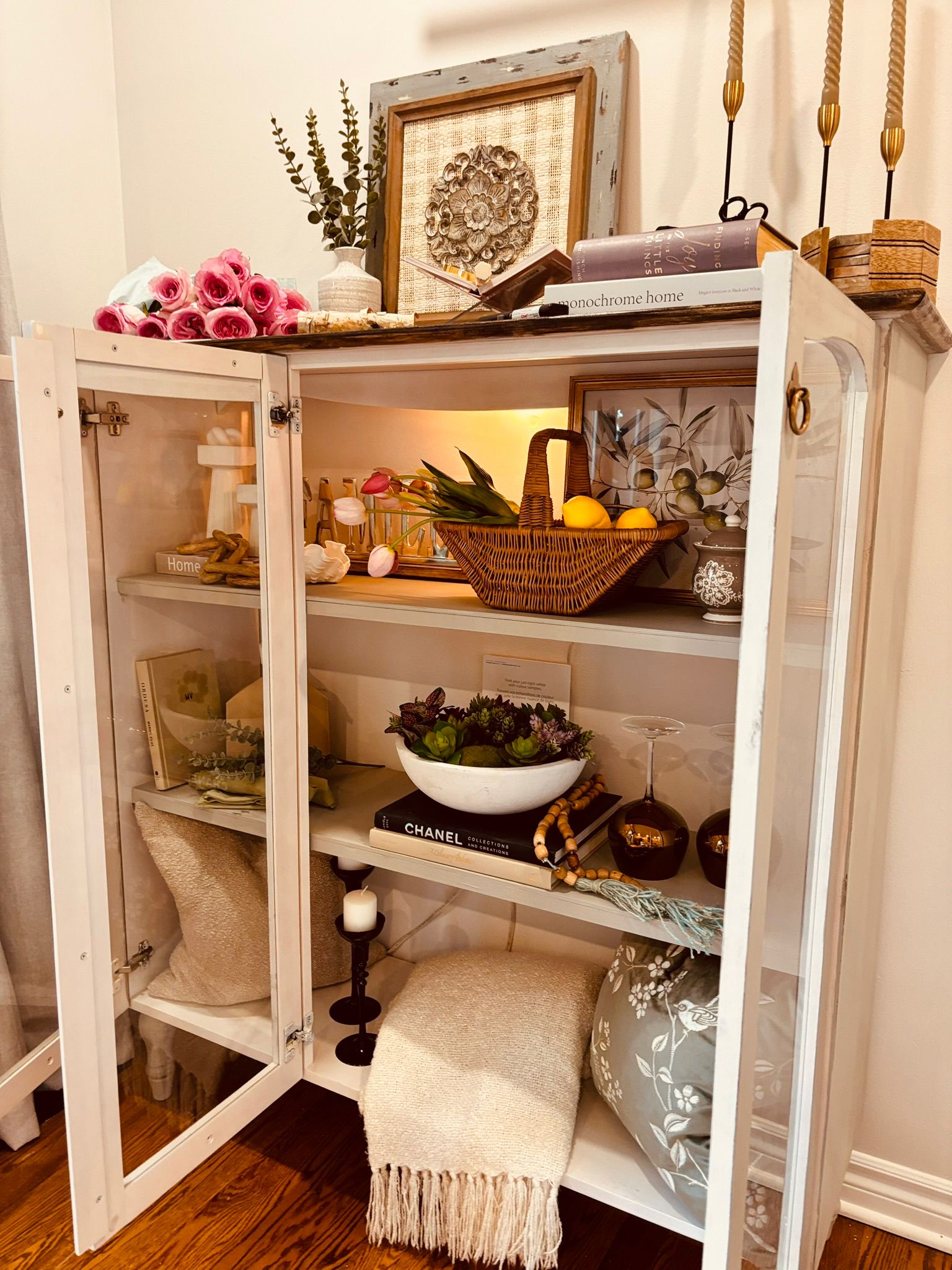
Books can be paired with ceramics. A framed photograph might sit beside a small decorative object. A vase can stand on its own with open space surrounding it.
That open space is important.
It allows individual pieces to become visible rather than disappearing into a collection of clutter.
Curated shelving gives a small room personality while maintaining visual calm.
Use Greenery Strategically
Plants introduce color, movement, and natural texture without requiring major changes to a room.
In a smaller space, however, there is no need to create an indoor jungle.
One beautiful plant may provide all the greenery the room needs.
A tall plant can emphasize ceiling height. A small arrangement can soften a coffee table or console. Decorative branches placed in a statement vase can add vertical interest.
Greenery works particularly well alongside warm neutrals and natural materials because it introduces subtle contrast.
Make the Entryway Feel Intentional
Small entryways deserve just as much consideration as larger living spaces.
They are often the first impression of the home.
Even a narrow Ottawa entryway can feel complete with a few carefully chosen elements.
A slim console can provide a place for keys while creating an opportunity for decor. A mirror can reflect light and make the entrance appear more open. A decorative bowl or vase can provide a simple finishing touch.
Practical storage also matters.
Reducing visible shoes, bags, coats, and everyday clutter allows the decorative elements to stand out.
The result is an entrance that feels welcoming rather than crowded.
Give Small Bedrooms a Sense of Calm
Smaller bedrooms benefit enormously from restraint.
Because the bed already occupies much of the visual space, there is often no need for excessive decoration.
Instead, focus on creating comfort through layers.
Soft bedding, a textured throw, decorative pillows, warm bedside lighting, and one meaningful piece of artwork can be enough to create a beautiful retreat.
Keeping bedside tables relatively clear also helps.
Rather than several small accessories, consider a lamp paired with one decorative piece.
A bedroom should feel restful first.
Add Personality Without Following Every Trend
One challenge with smaller spaces is that every decorative choice becomes more noticeable.
That makes personal style especially important.
Instead of purchasing something simply because it is currently popular, homeowners can choose pieces they genuinely enjoy seeing every day.
That might include an unusual vase, artwork with personal meaning, a distinctive mirror, collected ceramics, family photography, or an object brought home from travelling.
These details prevent a carefully styled room from feeling generic.
A home can be polished while still feeling personal.
Think About How One Room Connects to the Next
Small spaces can feel larger when there is a sense of continuity throughout the home.
This does not mean every room should look identical.
Instead, subtle details can repeat from one area to another.
The same warm wood tone might appear in the living room and entryway. Similar ceramic finishes could appear throughout several rooms. A recurring accent color can quietly connect separate spaces.
This creates visual flow.
As someone moves through the home, each room feels like part of a larger story rather than an isolated decorating project.
Know When the Room Is Finished
Perhaps one of the hardest parts of decorating is knowing when to stop.
There will almost always be another vase, picture, cushion, or accessory that could be added.
But a room does not become complete simply because every available surface has been decorated.
Sometimes the final step is removing something.
Stand at the entrance to the room and look at the space as a whole. Is there a clear focal point? Does the furniture feel balanced? Are the decorative pieces competing with one another? Is there enough open space?
If the room feels calm, functional, and personal, it may already be finished.
Small Spaces Can Still Make a Big Impression
A smaller room does not have to be treated as a decorating limitation.
In many ways, compact spaces provide an opportunity to be more selective and creative. Every piece can contribute something meaningful, whether it provides function, comfort, texture, personality, or beauty.
Across Ottawa, Gloucester, Orleans, Nepean, Vanier, and Navan, homeowners can use these same principles to make rooms of almost any size feel more intentional.
The goal is not to disguise the size of the space.
It is to make the available space work beautifully.
Final Thoughts
Making a small room feel stylish, spacious, and complete comes down to thoughtful choices rather than the number of things inside it.
Ottawa homeowners can transform compact interiors by improving furniture placement, embracing natural light, layering lighting, using mirrors strategically, choosing larger statement pieces carefully, introducing texture, simplifying shelves, and leaving enough open space for the room to breathe.
Most importantly, small-space styling should still feel personal.
A beautifully decorated home is not defined by square footage. It is defined by how successfully the space supports everyday life while creating a feeling of warmth, comfort, and belonging.
Sometimes the smallest rooms become the most special ones in the house because every detail has been chosen for a reason.