

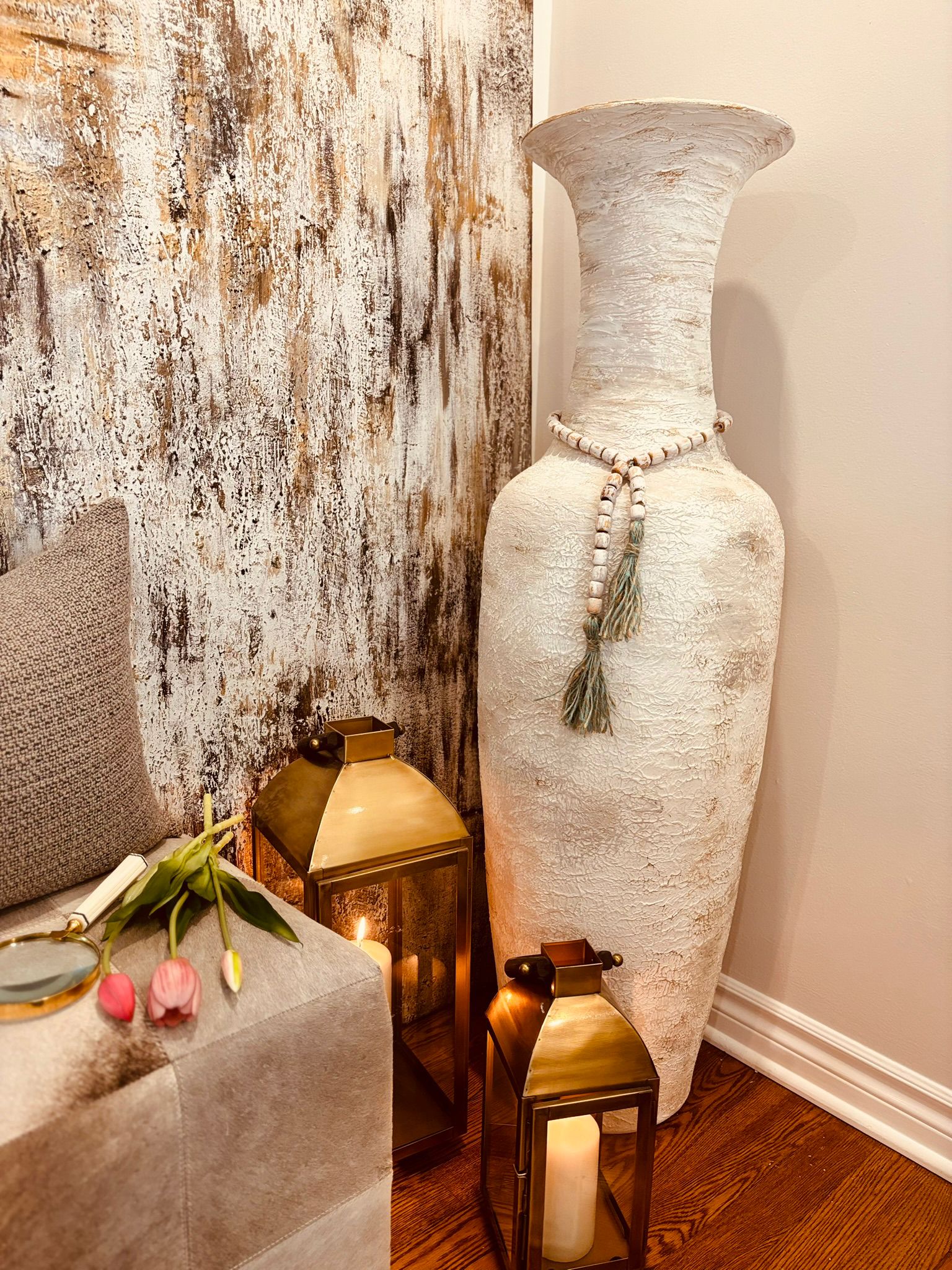
There is a moment during decorating when a room is technically finished but somehow does not feel finished.
The furniture is in place. The walls have been painted. The curtains are hung. The major pieces have been chosen. Yet something still seems to be missing.
Often, that missing ingredient is not another piece of furniture or a dramatic change to the room. It is the finishing touch.
Across Orleans, homeowners are discovering how much influence the final decorative details can have on an interior. A sculptural vase on a console, an oversized mirror positioned to catch natural light, a carefully styled coffee table, textured cushions, artwork, greenery, or the right table lamp can suddenly make everything else in the room make sense.
These details create connection. They help separate pieces feel like they belong together and give a room the warmth and personality that furniture alone cannot provide.
The art of the finishing touch is ultimately about knowing what to add, where to place it, and perhaps most importantly, when to stop.
Why Some Rooms Feel Unfinished
An unfinished feeling does not necessarily mean a room is empty.
Sometimes a room can contain plenty of furniture and decor and still feel disconnected.
The problem is often that the individual elements are not visually communicating with one another.
A sofa may be beautiful. The coffee table may be beautiful. The rug and curtains may also be beautiful. But if there is nothing connecting their colors, textures, shapes, or proportions, they can feel like individual purchases rather than parts of one complete interior.
Finishing touches help create those relationships.
A ceramic vase might repeat the warm tone found in a rug. A decorative cushion might subtly connect an accent chair to the artwork above the sofa. A black-framed mirror might repeat the finish of a nearby lamp.
These details can be small, but their influence on the overall room can be significant.
Start by Looking at the Entire Room
Before adding anything new, it helps to stop looking at individual pieces and consider the room as a whole.
Stand at the entrance and take everything in.
Where does the eye naturally go?
Is there an obvious focal point?
Does one side of the room feel heavier than the other?
Are there areas that seem empty while others appear crowded?
Does the room feel warm and inviting, or does it seem flat?
Looking at the complete space often reveals what is actually missing.
The answer may not be more decor. It could be height, texture, warmth, lighting, contrast, or simply better balance.
Understanding that difference is what makes finishing touches feel intentional.
Give the Room a Clear Focal Point
One of the easiest ways to make an interior feel complete is to establish something that immediately captures attention.
A focal point gives the eye somewhere to land.
Depending on the room, it could be an architectural feature such as a fireplace or large window. In other spaces, the focal point can be created through decor.
An oversized mirror, distinctive piece of artwork, pair of floor vases, beautiful light fixture, or thoughtfully styled console can all provide that visual anchor.
Once the focal point is established, surrounding decor should support it rather than compete with it.
This immediately gives the room greater clarity.
Use Decorative Vases to Add Height and Shape
Decorative vases are particularly useful when finishing a room because they can introduce several design elements at once.
They provide shape, texture, height, and visual interest.
A tall floor vase can bring purpose to an empty corner without requiring another piece of furniture. A sculptural tabletop vase can add dimension to a console or dining table. A pair of complementary vessels can create balance without looking overly matched.
Vases can also be styled differently depending on the desired effect.
Some are beautiful enough to stand completely on their own. Others can be paired with branches, greenery, or dried botanicals to create additional height.
The key is choosing pieces that complement the scale of the room.
A large empty wall or substantial console often needs something with enough presence to hold its own.
Mirrors Can Completely Change a Space
Mirrors are one of the most practical finishing touches because they contribute both decoration and function.
In Orleans homes where maximizing natural light is important, a well-positioned mirror can reflect daylight deeper into a room.
Mirrors can also create the impression of greater depth, which makes them particularly useful in entryways, dining spaces, smaller living rooms, and hallways.
But their impact goes beyond making rooms appear brighter or larger.
The frame itself can introduce character.
A curved mirror can soften a room dominated by straight lines. A darker frame can introduce contrast. A simple oversized design can create a clean, sophisticated focal point.
Instead of treating a mirror purely as something functional, it can become part of the room’s personality.
Layer Textures to Create Warmth
Rooms often feel unfinished when everything has a similar surface.
If the sofa, curtains, rug, tables, and accessories all appear visually smooth, there may not be enough variation to create depth.
Texture solves this beautifully.
Orleans homeowners can layer materials such as:
- Linen
- Cotton
- Woven fibres
- Ceramic
- Natural wood
- Glass
- Soft upholstery
- Stone inspired finishes
The room does not necessarily need more color.
A completely neutral space can still feel rich when the materials have enough variation.
A textured throw over a smooth sofa, a ceramic vessel on a wooden console, or a woven basket beside an upholstered chair introduces contrast without making the room feel busy.
Don’t Underestimate Cushions and Throws
Soft furnishings are among the simplest finishing touches, but they can dramatically change a room.
Cushions provide an opportunity to introduce color, texture, pattern, and softness without making permanent changes.
The goal does not have to be perfect matching.
In fact, combining slightly different textures and complementary tones often creates a more relaxed appearance.
A sofa might combine a larger neutral cushion with a smaller textured design and one subtle accent color.
A throw can then introduce another layer.
These elements make seating feel more inviting while helping connect the furniture to the rest of the room.
Treat Lighting as Decor
Lighting should not be considered only from a practical perspective.
A beautiful lamp can function almost like a sculpture.
Table lamps can complete consoles and side tables. Floor lamps can add height to corners. Pendants can establish focal points over dining tables.
The light itself also changes how every other decorative choice is experienced.
Warm, layered illumination enhances textures and creates softer shadows throughout the room.
Rather than relying entirely on one overhead fixture, consider how multiple light sources can create different moods.
This becomes especially valuable during Ottawa’s darker months, when interiors naturally become an important source of warmth and comfort.
Style the Coffee Table Without Overcrowding It
Coffee tables provide a perfect opportunity for finishing touches because they sit near the visual centre of many living rooms.
But they are also easy to overdecorate.
A coffee table does not need six or seven unrelated objects.
A simple grouping often works better.
For example, a decorative tray can provide structure. A small stack of books can create height. A sculptural object or candle can add personality. A vase or subtle greenery can introduce an organic shape.
The remaining surface should still be functional.
The most successful styling looks intentional without making the table unusable.
Give the Dining Table a Little Personality
Dining rooms can sometimes feel unfinished because the table becomes a large empty surface when it is not being used.
A simple centerpiece can change that.
Rather than creating an elaborate arrangement, consider a substantial decorative bowl, sculptural vessel, pair of complementary objects, or vase with understated greenery.
Scale is important.
A larger table usually needs something with enough presence to avoid looking lost in the centre.
At the same time, the arrangement should not overwhelm the room or interfere with conversation.
The best finishing touches complement everyday life rather than getting in the way of it.
Style Shelves With Space in Mind
Open shelves are wonderful places to display meaningful objects, but more is not always better.
One of the easiest ways to make shelving look more refined is to remove some items.
Create small arrangements using books, ceramics, framed photographs, decorative objects, and greenery.
Then leave open space around them.
That negative space allows individual pieces to be appreciated.
It also creates rhythm across the shelving instead of presenting one continuous wall of objects.
A shelf should feel collected rather than crowded.
Use Artwork to Introduce Personality
Artwork is one of the strongest tools for completing an interior because it adds something furniture cannot: personal expression.
A room with beautiful furniture but empty walls can sometimes feel temporary.
Artwork gives those walls purpose.
The right piece can introduce color, movement, texture, or emotion.
Homeowners do not necessarily need to cover every wall. One substantial piece often creates greater impact than several unrelated smaller ones.
The artwork should also relate to the furniture around it.
A piece hanging above a sofa, bed, or console should feel visually connected to what sits beneath it rather than floating independently on the wall.
Bring Natural Elements Into the Room
Organic shapes provide a beautiful contrast to the straight lines found in most homes.
Plants, branches, greenery, wood, and natural materials can soften an interior while adding subtle movement.
A tall plant might complete an empty corner.
Decorative branches can add height to a console.
A small arrangement of greenery can soften a coffee table.
These additions work particularly well in rooms with warm neutral palettes because natural greens and wood tones introduce gentle variation without disrupting the overall calmness.
Remember the Entryway
Finishing touches should begin before reaching the living room.
The entrance establishes the mood of the entire home.
Even a relatively small Orleans entryway can feel thoughtfully designed with a few well-selected pieces.
A mirror can add depth. A console can provide function. A decorative bowl offers a practical place for everyday essentials. A lamp introduces warmth. A statement vase or artwork provides personality.
The goal is to make the entrance feel considered without interfering with movement.
A beautiful entryway quietly tells visitors what to expect from the rest of the home.
Don’t Forget About Empty Corners
Almost every home has an awkward corner.
The instinct is often to add another piece of furniture, but that is not always necessary.
An empty corner might only need:
- A floor lamp
- A tall plant
- A statement floor vase
- A decorative basket
- A small accent chair
Sometimes it needs nothing at all.
Before filling a corner, consider whether adding something improves the overall balance of the room.
If it does not, leaving it open may actually make the room feel larger and calmer.
Mix Shapes to Create a More Natural Interior
Many rooms contain a surprising number of rectangles.
Sofas, tables, windows, rugs, televisions, frames, shelving, and cabinetry often share similar straight lines.
Introducing different shapes can make the room feel softer and more interesting.
Consider adding:
- Round mirrors
- Curved vases
- Circular trays
- Organic sculptures
- Rounded lamps
- Softly shaped accent chairs
These elements break up rigid lines and create movement.
The contrast can be subtle, but it often makes a room feel significantly more polished.
Repeat Details Without Making Everything Match
A complete interior usually contains some repetition.
Perhaps the same wood tone appears on a coffee table and picture frame. Maybe a warm brass finish appears on a lamp and decorative object. A soft green from the artwork might appear again in a cushion.
These repeated details create visual relationships.
However, repetition does not mean everything needs to match perfectly.
A home filled with identical furniture collections and matching accessories can sometimes feel overly coordinated.
Variation creates personality.
The goal is connection, not duplication.
Make the Bedroom Feel Finished
Bedrooms often need fewer finishing touches than living areas because calmness should remain the priority.
A few carefully selected details can make the space feel complete.
Layered bedding adds softness. Bedside lamps create warmth. Artwork provides a focal point. A decorative throw introduces texture. A small vase or sculptural object can complete a nightstand.
Rather than decorating every available surface, allow the room to remain peaceful.
The finishing touches should contribute to rest rather than visual stimulation.
Personal Objects Are Often the Best Finishing Touches
A room should not look as though it could belong to anyone.
Some of the most meaningful finishing touches are items connected to the people who live there.
Family photographs, travel finds, collected books, handmade pieces, sentimental objects, and artwork can give a room an identity that cannot be created through furniture alone.
These items do not need to dominate the space.
Even one meaningful object displayed intentionally can add tremendous character.
Personal details are what turn decorating into storytelling.
Seasonal Changes Don’t Need to Be Dramatic
Orleans experiences four very distinct seasons, and the home naturally feels different throughout the year.
Finishing touches provide an easy way to acknowledge those changes without completely redecorating.
During colder months, heavier throws, warmer textures, candles, and deeper accents can create additional coziness.
During spring and summer, lighter textiles, fresh greenery, softer accessories, and brighter arrangements can make rooms feel refreshed.
The foundation remains the same.
Only a few details change.
This keeps the home interesting without constantly starting over.
Know When to Stop Decorating
Perhaps the greatest skill in finishing a room is knowing when it is finished.
It is easy to keep adding.
Another cushion. Another vase. Another piece of artwork. Another object for the shelf.
Eventually, those finishing touches can begin competing with one another.
Once a room has a clear focal point, comfortable furniture, balanced lighting, texture, personality, and enough open space, it may not need anything else.
Removing one item can sometimes improve a room more than adding another.
Good decorating is as much about editing as it is about selecting.
A Complete Home Doesn’t Have to Look Perfect
There is an important difference between a complete interior and a perfect one.
Perfect rooms can feel untouchable.
Complete rooms feel comfortable.
They have enough detail to create personality but enough flexibility to accommodate everyday life. There may be a book left beside a chair, a throw casually placed over the sofa, or family photographs mixed among decorative pieces.
Those signs of life do not take away from the design.
They make the home feel authentic.
Final Thoughts
The finishing touches are often what transform a collection of furniture into a home that feels genuinely considered.
Across Orleans, homeowners can bring their interiors together through thoughtful combinations of artwork, mirrors, decorative vases, lighting, greenery, textiles, personal objects, and carefully styled surfaces.
The key is not adding as much as possible.
It is understanding what the room needs.
Sometimes that means introducing height. Sometimes it means adding softness, contrast, light, texture, or personality. And sometimes the final finishing touch is simply removing one unnecessary item and allowing everything else to breathe.
A beautifully finished home should never feel forced.
It should feel as though every piece naturally found its place, creating an interior that is warm, balanced, personal, and unmistakably home.

