
Older homes often have something newer spaces cannot easily replicate: character.
Original layouts, established neighbourhoods, unique room proportions, mature surroundings, and years of history all give older homes a sense of personality. At the same time, some rooms can begin to feel dated when finishes, furniture, lighting, and decor no longer reflect how people want to live today.
Across Navan, homeowners are finding ways to refresh these spaces without removing everything that makes them special.
Instead of completely rebuilding rooms, many are using thoughtful decor to create a fresher, more modern atmosphere while preserving the warmth and character of the home.
The result is not a house that feels brand new.
It is a home that feels renewed.
Start With What Is Already Working
Before changing anything, it helps to identify the parts of an older room that still feel valuable.
That might include:
- Original hardwood flooring
- A fireplace
- Large windows
- Traditional trim
- Built-in shelving
- Solid wood furniture
- Interesting architectural details
Not every older element needs to disappear.
Sometimes the most successful updates happen when homeowners keep the strongest features and modernize everything around them.
A traditional fireplace, for example, can feel completely different when paired with contemporary artwork, a large mirror, simplified accessories, and warm neutral furnishings.
The contrast between old and new often creates more character than replacing everything.
Simplify the Color Palette
One of the easiest ways to refresh an older interior is by simplifying the colors throughout the room.
Older spaces sometimes contain several competing tones from furniture, flooring, paint, curtains, and decor accumulated over the years.
Introducing a more cohesive palette can immediately make the room feel calmer and more current.
Many Navan homeowners are choosing shades such as:
- Warm white
- Cream
- Beige
- Taupe
- Soft greige
- Muted olive
- Warm brown
These colors work particularly well because they complement both traditional architecture and modern furnishings.
They create a softer foundation without making the home feel cold.
Replace Visual Clutter With Stronger Pieces
Older rooms often accumulate decorative items over time.
Shelves become full. Tabletops collect objects. Walls gradually become covered with artwork and photographs.
None of these individual pieces may be a problem, but together they can make the room feel visually busy.
A modern refresh often begins with editing.
Instead of displaying ten small accessories, homeowners might choose one substantial vase, a sculptural bowl, a larger piece of artwork, or a decorative mirror.
Fewer pieces with stronger presence create cleaner sightlines while preserving personality.
Modern styling is often less about removing character and more about giving important pieces enough room to stand out.
Update Lighting Before Replacing Furniture
Sometimes a room feels dated because of the lighting rather than the furniture.
An older ceiling fixture or harsh bulb can influence the atmosphere of the entire space.
Adding modern lighting can create an immediate update.
Consider:
- Sculptural table lamps
- Slim floor lamps
- Updated pendants
- Decorative sconces
- Warm bulbs
- Accent lighting
Layering several light sources also creates a much softer appearance than relying entirely on one ceiling fixture.
A traditional room with beautiful warm lighting can suddenly feel sophisticated and contemporary without changing its architectural character.
Use Mirrors to Brighten Older Rooms
Some older homes have rooms with smaller windows or layouts that do not receive as much natural light as newer open-concept spaces.
Mirrors can help.
A well-positioned mirror reflects light and creates additional visual depth.
Large mirrors also introduce a contemporary focal point while requiring very little floor space.
A modern curved mirror above an older console, for example, can create a beautiful contrast between traditional and contemporary design.
Mirrors are particularly effective in:
- Entryways
- Dining rooms
- Living spaces
- Bedrooms
- Hallways
They make rooms feel brighter without making them feel completely redesigned.
Introduce Modern Shapes
Older homes often contain many traditional rectangular shapes.
Doors, windows, cabinetry, tables, and older furniture can all create strong straight lines throughout the room.
Introducing softer shapes immediately makes the space feel more current.
Homeowners can add:
- Rounded mirrors
- Curved accent chairs
- Circular coffee tables
- Sculptural lamps
- Organic vases
- Rounded decorative bowls
These softer forms create contrast and movement.
Even one or two curved elements can make a traditionally styled room feel significantly fresher.
Refresh Older Furniture Instead of Removing Everything
Furniture does not necessarily need to be replaced simply because it has been in the home for years.
A quality wood table, console, dresser, or cabinet can often work beautifully within a more modern design.
The surrounding styling makes the difference.
An older wooden console might be refreshed with:
- A large contemporary mirror
- Simple ceramic decor
- A modern lamp
- Minimal tabletop accessories
A traditional dining table might feel more current when paired with updated chairs and a new light fixture.
Mixing older furniture with modern decor gives a home depth.
It also prevents the interior from feeling as though everything was purchased at the same time.
Bring in Natural Materials
Natural materials create an easy connection between older homes and contemporary styling.
Wood, linen, ceramic, stone-inspired surfaces, cotton, and woven textures feel timeless enough to work with traditional architecture while remaining popular in modern interiors.
These materials can be introduced through:
- Decorative bowls
- Vases
- Cushions
- Rugs
- Curtains
- Baskets
- Small furniture pieces
Natural finishes also make modern updates feel warmer.
This is especially helpful when homeowners want a fresh appearance without turning a comfortable family home into something stark or overly minimalist.
Update Soft Furnishings
Textiles can date a room more quickly than many homeowners realize.
Heavy curtains, highly coordinated cushions, older rugs, or overly formal fabrics can make an otherwise beautiful space feel less current.
Updating these elements can produce a noticeable transformation.
Consider introducing:
- Simple linen curtains
- Textured neutral cushions
- Soft throws
- Larger area rugs
- More relaxed bedding
These details make rooms feel lighter and more comfortable.
Because they are relatively easy to change, textiles are also a good place to introduce a more contemporary style without making permanent decisions.
Make the Living Room Feel Lighter
Living rooms in older homes often contain substantial furniture.
Large sofas, cabinets, entertainment units, and side tables can create visual weight.
That does not necessarily mean everything needs to be replaced.
Instead, homeowners can lighten the surrounding decor.
For example, a heavier sofa can be paired with a simpler coffee table.
A traditional cabinet can sit beside a modern floor lamp.
Dark furniture can be balanced with a lighter rug, neutral cushions, and warm walls.
Contrast prevents older furniture from making the entire room feel heavy.
Modernize the Coffee Table Styling
Small details can make older living rooms feel much more current.
Coffee table styling is an easy example.
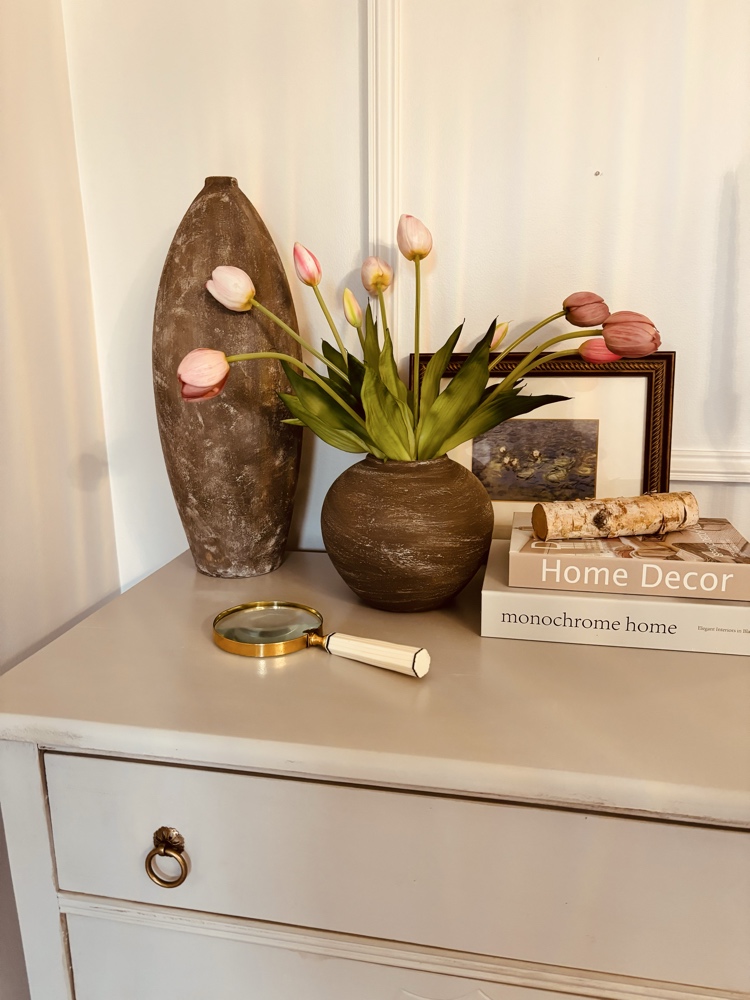
Instead of several unrelated objects, choose a simple arrangement.
A modern combination might include:
- A decorative tray
- Two books
- A ceramic vessel
- One sculptural object
This creates a cleaner visual moment.
The table still feels decorated, but the arrangement looks intentional rather than accumulated.
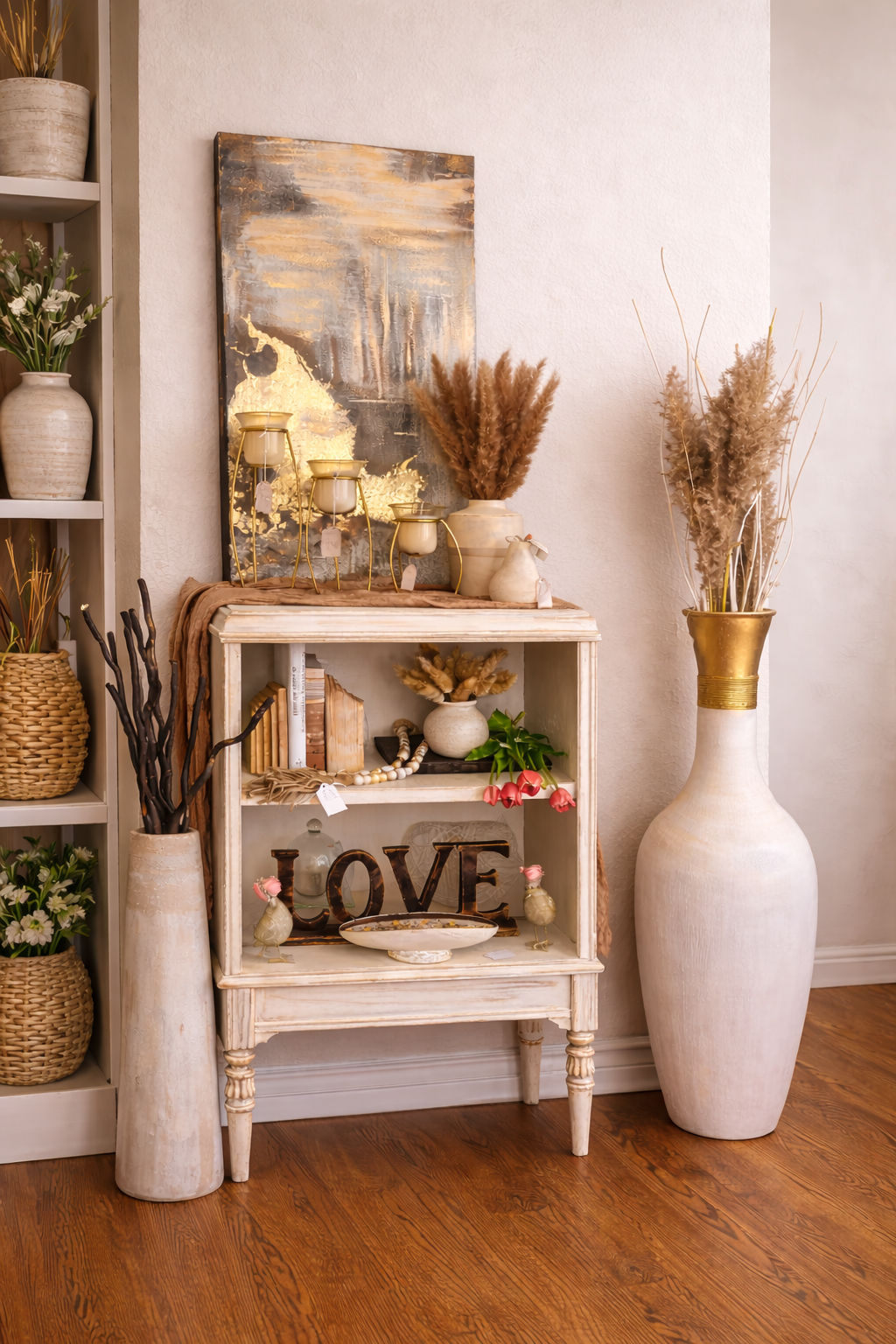
Give Shelving More Space
Built-in shelving can be one of the most charming features of an older home.
However, shelves that are completely filled can make the room feel busier than necessary.
A modern approach involves leaving more breathing room.
Homeowners can create smaller arrangements using:
- Books
- Ceramics
- Artwork
- Framed photographs
- Sculptural objects
Then leave sections intentionally open.
This allows the architecture of the shelving itself to remain visible and gives displayed pieces greater importance.
Create a More Modern Entryway
An older entryway can often be refreshed without changing the flooring, staircase, or layout.
A few simple additions can create a completely different first impression.
Consider:
- A slim console
- An oversized mirror
- A modern table lamp
- A ceramic vase
- A decorative tray
- A simple runner
The contrast between original architectural details and cleaner modern decor can be particularly beautiful.
The space feels updated without losing its history.
Refresh Bedrooms Through Simplicity
Bedrooms are another area where older styling can be updated relatively easily.
Rather than replacing all the furniture, homeowners can simplify everything around it.
A wooden bedroom set may feel significantly more modern with:
- Neutral bedding
- Layered textures
- Contemporary lamps
- Simplified artwork
- Minimal bedside styling
A bed that once felt traditional can suddenly become the foundation of a calm, modern retreat.
The goal is often to reduce visual noise rather than introduce more items.
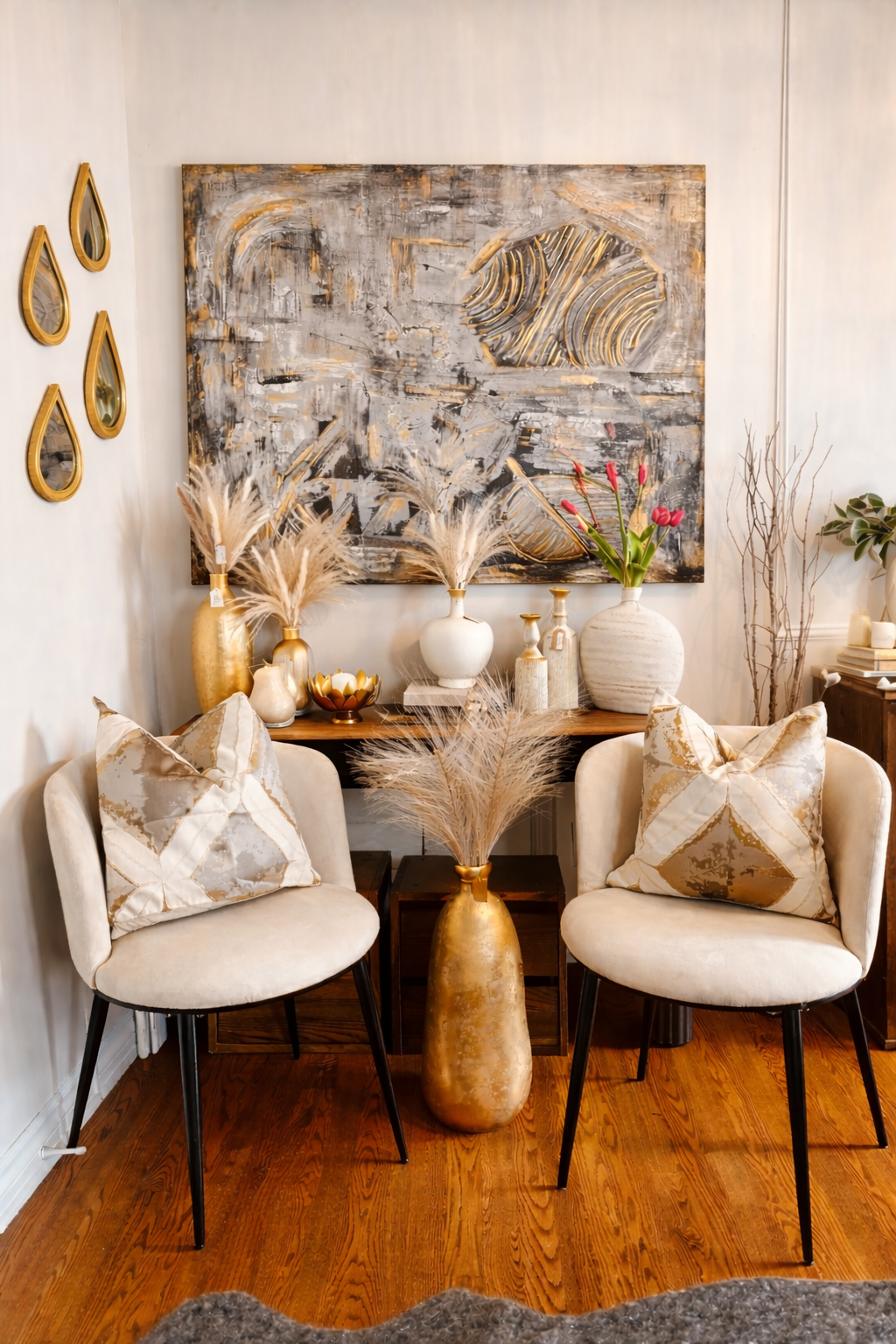
Use Artwork to Bridge Old and New
Artwork is a powerful tool when mixing contemporary and traditional elements.
Modern artwork can create contrast against older architecture.
More traditional artwork can also work beautifully when framed and displayed in a cleaner way.
The important thing is scale and placement.
One larger piece often creates a fresher appearance than several smaller artworks scattered across the wall.
Artwork can also introduce colors that connect older furniture with newer decorative choices.
Refresh the Dining Area Without Replacing the Table
A quality dining table can last for decades.
Rather than replacing it, homeowners can update everything around it.
A dining room can feel completely different with:
- New chairs
- A contemporary pendant
- A sculptural centerpiece
- Updated artwork
- A modern rug
The table remains familiar while the overall room feels refreshed.
This is a good example of how decor can change the perception of an existing feature.
Introduce Black Accents Carefully
Black accents can add definition to older interiors and create a more contemporary look.
They can appear in:
- Mirror frames
- Lamps
- Picture frames
- Decorative objects
- Hardware
Only a small amount may be needed.
Black creates contrast against warm wood, cream, beige, and other natural shades.
The key is repetition.
Using a small touch of black in several areas can make the room feel connected without becoming too dark.
Keep Original Character Visible
One of the biggest mistakes homeowners can make when modernizing an older home is hiding everything that makes it unique.
Original features often provide the personality newer homes are designed to imitate.
Instead of removing them, highlight them.
A traditional fireplace can become the focal point.
Original hardwood can provide warmth beneath more modern furnishings.
Detailed trim can look beautiful against a simplified color palette.
The goal should be evolution, not erasure.
Add Greenery for an Instant Refresh
Plants can quickly make an older room feel fresher.
Their organic shapes soften traditional furniture while introducing movement and color.
A tall plant can bring life to an unused corner.
Smaller greenery can refresh shelves or consoles.
Branches in a statement vase can create height and contemporary shape.
Greenery works particularly well because it feels neither modern nor traditional.
It simply makes a room feel alive.
Use Rugs to Connect Old and New
A new rug can completely change the character of a room.
It creates a visual foundation for furniture and can help bridge different styles.
An older sofa and contemporary coffee table may feel unrelated until a rug visually connects them.
Texture, rather than dramatic pattern, can work especially well when the room already contains architectural character.
A generous rug also makes the seating arrangement feel more intentional.
Don’t Try to Make Every Room Ultra-Modern
Refreshing an older home does not mean every room needs to look completely contemporary.
In fact, pushing too far in that direction can make the new elements feel disconnected from the architecture.
A better approach is balance.
Some rooms may lean more modern.
Others may keep stronger traditional influences.
Repeating materials, colors, and decorative details throughout the home helps everything feel connected despite those differences.
Personal Pieces Still Belong
Modern styling should never remove the personal history of a home.
Family photographs, meaningful artwork, collected objects, books, and heirlooms can remain part of the design.
The difference is often how they are displayed.
Instead of placing every photograph on one surface, choose a few favorites.
Instead of displaying an entire collection at once, rotate pieces or create one intentional grouping.
Editing gives personal items greater significance.
Updating Slowly Can Create Better Results
There is no need to modernize an older interior all at once.
In fact, gradual updates can result in a much more natural space.
A homeowner might begin with lighting.
Then update textiles.
Later, artwork, mirrors, decorative objects, or a new accent chair might be introduced.
This approach allows the home’s character to guide the process.
It also prevents the interior from feeling overly coordinated or artificially new.
Modern Does Not Have to Mean Minimal
There is an important difference between creating a modern feel and removing everything from the room.
Modern homes can still be:
- Warm
- Layered
- Personal
- Comfortable
- Full of meaningful objects
The goal is usually clarity rather than emptiness.
A room can have plenty of character while still maintaining clean sightlines, intentional decor, and visual balance.
Final Thoughts
Navan homeowners do not need to erase the character of older spaces to give them a fresh, modern feel.
Often, the most successful updates come from working with what is already there.
Warm neutral colors, modern lighting, cleaner decorative arrangements, natural materials, statement mirrors, updated textiles, artwork, greenery, and thoughtful furniture placement can completely change the atmosphere of an older room.
The beauty comes from the contrast.
Original features provide history and warmth. Modern decor introduces freshness and simplicity. Together, they create homes that feel current without becoming generic.
A great refresh should not make an older home feel like a different house.
It should make everything people already love about the home feel even better.