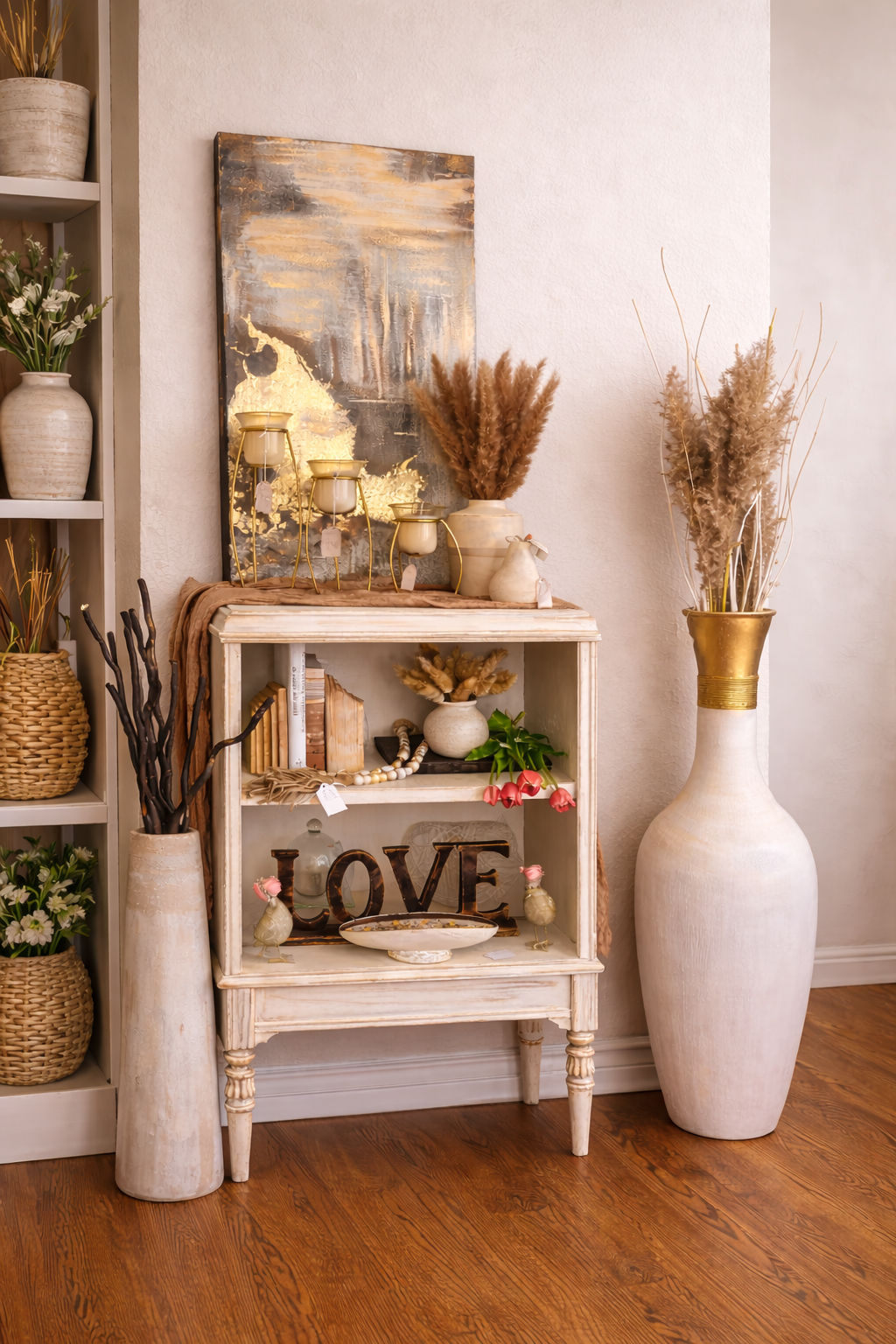

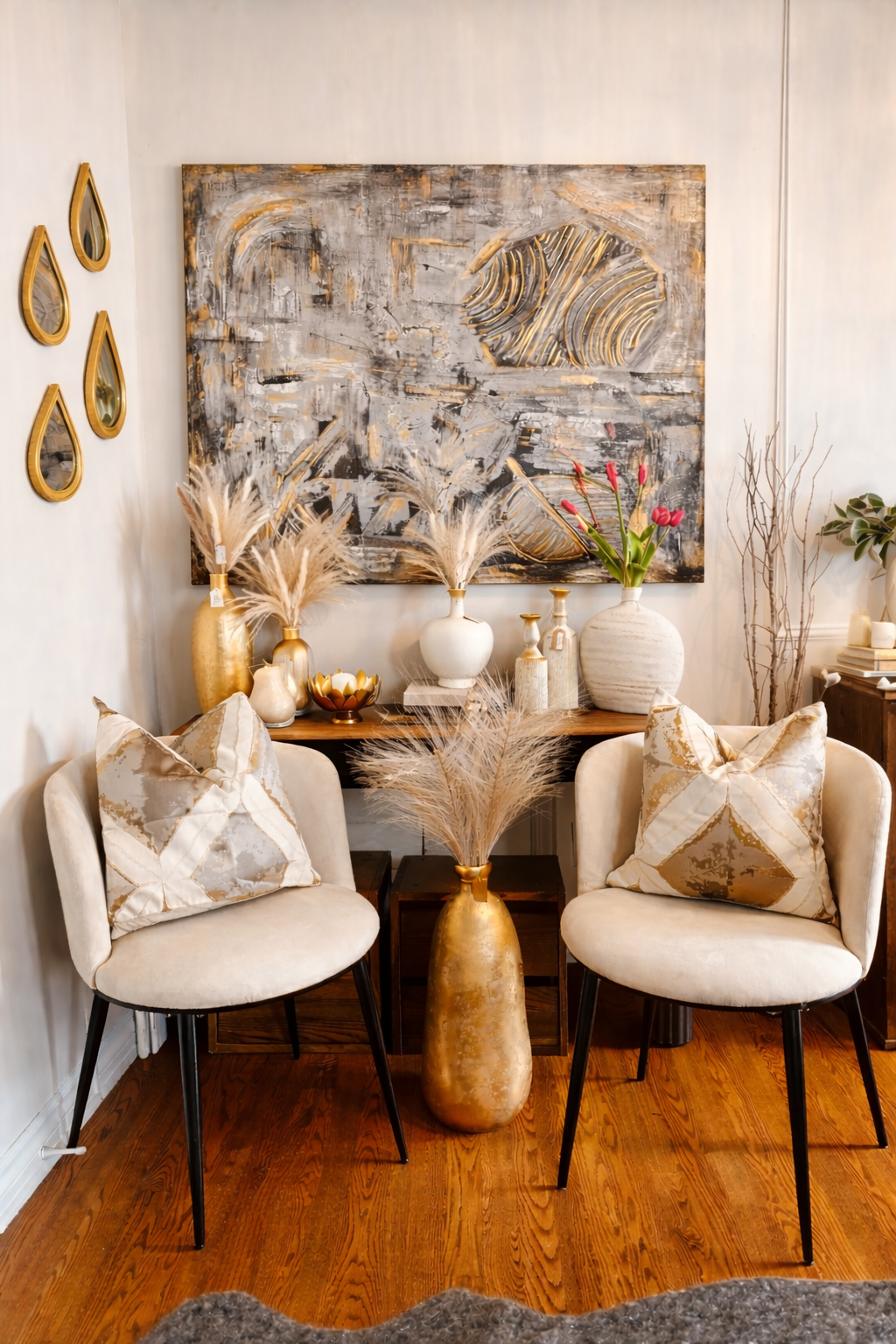
A beautifully styled room usually has one thing in common: there is somewhere for the eye to land.
That visual anchor is what gives the space direction. It might be a dramatic mirror, a sculptural vase, a piece of artwork, a fireplace, a statement light fixture, or even a beautifully styled console. Whatever form it takes, a focal point helps the room feel intentional instead of scattered.
Across Nepean, more homeowners are using focal points to bring their interiors together without overdecorating. Instead of trying to make every wall, shelf, and corner equally noticeable, they are choosing one or two strong features and allowing the rest of the room to support them.
This approach creates homes that feel calmer, more elegant, and much easier to enjoy.
Why Every Room Benefits From a Focal Point
Without a clear focal point, a room can sometimes feel visually busy even when it is not especially cluttered.
The eye moves from one object to another without settling anywhere.
A focal point creates order.
It gives the room a natural centre and helps surrounding furniture and decor feel more connected.
That is why focal points are so useful in living rooms, bedrooms, dining spaces, entryways, and even smaller areas such as hallways or home offices.
The goal is not to make the room dramatic.
It is to give it purpose.
Start With What the Room Already Has
Before adding anything new, homeowners can look at the architectural features already present.
Sometimes the best focal point is already there.
That might include:
- A fireplace
- A large window
- A beautiful staircase
- Built-in shelving
- An interesting wall
- A dining table
- A strong furniture arrangement
Instead of competing with these features, decor can be used to highlight them.
For example, a fireplace may only need a large mirror or artwork above it to become the natural centre of the room.
A beautiful window might need softer curtains and a nearby chair to turn it into a comfortable reading area.
Working with what already exists often produces the most natural result.
Oversized Mirrors Are Making a Strong Impact
Mirrors are one of the most effective ways to create a focal point because they combine beauty with function.
A large mirror can:
- Reflect natural light
- Make the room feel larger
- Add height
- Introduce shape
- Create visual depth
In Nepean homes with smaller entryways or living areas, this can make a significant difference.
The frame also becomes part of the design.
A curved mirror can soften a room with many straight lines. A dark frame can provide contrast. A simple oversized mirror can create a clean, modern look.
The key is choosing a size that feels substantial enough to anchor the wall.
Statement Vases Create Height Without Adding Furniture
An empty corner does not always need another chair or table.
Sometimes a tall decorative vase provides all the visual weight the area needs.
Floor vases can create:
- Height
- Shape
- Texture
- Vertical interest
They also work beautifully beside fireplaces, consoles, media units, or large windows.
A vase can stand on its own or be paired with dried branches or greenery for extra movement.
This is a simple way to create a focal point without making the room feel crowded.
Artwork Gives a Room Personality
Artwork is one of the most personal ways to create a focal point.
A large piece above a sofa, bed, console, or dining area can immediately give the room direction.
The artwork does not need to match every color in the room.
In fact, it is often more interesting when it introduces a subtle contrast or unexpected tone.
What matters most is proportion.
A small piece floating above a large sofa can feel disconnected. A more substantial piece usually creates stronger balance.
Homeowners can also use artwork to bring more personality into otherwise neutral interiors.
Lighting Can Become the Feature
Lighting is no longer just functional.
A beautiful light fixture can act as a sculptural element within the room.
Popular focal-point lighting might include:
- A pendant over a dining table
- A dramatic floor lamp
- A sculptural table lamp
- A distinctive chandelier
- Decorative sconces
This works especially well in spaces that do not naturally have an architectural focal point.
A strong lighting choice can draw attention while also improving the atmosphere of the room.
Living Rooms Need a Clear Visual Anchor
The living room is often the easiest place to understand the value of a focal point.
Without one, furniture may feel like it is simply arranged around the room.
A focal point helps everything else make sense.
It could be:
- A fireplace
- A television wall
- Oversized artwork
- A large mirror
- Statement lighting
- A sculptural coffee table
Once that feature is established, the furniture can be arranged to support it.
The result feels more intentional and comfortable.
Bedrooms Often Need Less
Bedrooms benefit from focal points too, but the overall feeling should remain calm.
The bed is usually the natural focal point, so the styling around it should reinforce that.
This can be done through:
- An upholstered headboard
- Large artwork
- Layered bedding
- Bedside lamps
- A textured wall treatment
- A decorative bench
There is usually no need to create several competing focal points.
One strong visual moment is often enough.
Dining Rooms Can Use the Table as the Star
Dining rooms naturally centre around the table.
Homeowners can emphasize it with:
- A statement light fixture
- A sculptural centerpiece
- A large piece of artwork
- A mirror on the surrounding wall
- Textured chairs
The goal is to make the dining area feel complete without overcrowding the table.
A simple ceramic vessel or decorative bowl can often provide all the finishing detail needed.
Entryways Make an Immediate Impression
The entryway is one of the best places to create a focal point because it sets the tone for the rest of the home.
A simple combination can create a strong impression:
- Slim console
- Oversized mirror
- Decorative vase
- Table lamp
- Small tray or bowl
The arrangement does not need to be complicated.
In fact, a simpler entryway often feels more elegant because each element is easy to appreciate.
Focal Points Work Best With Breathing Room
One of the biggest mistakes homeowners can make is surrounding a beautiful focal point with too many other items.
If every nearby surface is filled, the main feature loses impact.
Strong focal points need space.
That might mean:
- Leaving part of a wall empty
- Removing extra accessories
- Simplifying nearby shelves
- Using fewer decorative objects
Open space helps direct attention.
It also makes the room feel calmer.
Color Can Create a Focal Point Too
A focal point does not always need to be a physical object.
Color can create emphasis just as effectively.
A darker accent wall, warm olive chair, earthy piece of artwork, or textured rug can become the feature that ties the room together.
This is especially helpful in homes with neutral palettes.
One deeper color can provide enough contrast to make the entire room feel more interesting without overwhelming it.
Use Texture to Add Subtle Emphasis
Not every focal point needs to be bold.
Texture can create a quieter type of visual interest.
A heavily textured vase, boucle chair, woven wall hanging, natural wood table, or ceramic sculpture can stand out through material rather than color.
This works well in softer interiors where homeowners want elegance without dramatic contrast.
A Focal Point Should Match the Scale of the Room
Scale is one of the most important considerations.
A large room can usually support a larger statement piece.
A smaller room may benefit from something visually strong but physically lighter.
For example:
- Large living room: oversized artwork or floor vase
- Small entryway: mirror and slim console
- Bedroom: headboard and artwork
- Dining room: pendant and centerpiece
The focal point should feel important without overpowering the room.
Avoid Competing Features
Sometimes a room already has several interesting elements.
The challenge is deciding which one should lead.
If there is a fireplace, large artwork, bold rug, statement light, and oversized mirror all competing for attention, the room may feel restless.
Homeowners can choose one primary feature and allow the others to remain quieter.
This creates hierarchy.
The space still has personality, but it feels much more balanced.
Coffee Tables Can Become Mini Focal Points
In living rooms where the larger focal point is already established, the coffee table can act as a smaller supporting feature.
A simple arrangement might include:
- Decorative tray
- Sculptural object
- Vase
- Books
- Candle
Varying the height helps the arrangement feel more interesting.
The coffee table should feel styled but still functional.
Shelves Can Create a Collected Focal Point
Built-in or open shelving can become a strong visual feature when styled carefully.
The key is not filling every inch.
Homeowners can create small groupings using:
- Books
- Ceramics
- Framed photographs
- Sculptural objects
- Greenery
Repeating a few materials or colors can help the shelves feel connected.
Leaving negative space prevents the display from becoming overwhelming.
Natural Materials Make Focal Points Feel Warmer
Natural materials are particularly effective for creating focal points that feel elegant and relaxed.
Wood, ceramic, stone, linen, and woven textures naturally bring warmth into a room.
A large wooden console, sculptural ceramic vase, woven chair, or stone-inspired table can become a focal point without feeling overly formal.
These materials also work beautifully with modern and traditional interiors.
Plants Can Fill a Space Without Making It Heavy
Sometimes the best focal point is something living.
A large indoor plant can provide:
- Height
- Movement
- Color
- Organic shape
This is especially effective in corners that feel too empty for nothing but too tight for furniture.
A plant also softens hard architectural lines and helps a room feel more relaxed.
Create Focal Points That Reflect Personality
The best focal points are not always the most expensive ones.
They are often the pieces that feel meaningful.
A homeowner might choose:
- Artwork from a favorite artist
- A mirror with an unusual shape
- A vintage-inspired object
- A family heirloom
- A handmade ceramic piece
These choices give the home character.
A focal point should not only attract attention.
It should say something about the people who live there.
Allow the Eye to Travel Naturally
A beautifully styled home does not stop at one room.
Homeowners can use focal points to create a natural visual journey throughout the house.
The entryway might feature a mirror.
The living room might centre around artwork.
The dining room might use a pendant light.
The bedroom might focus on layered bedding and a statement headboard.
Each room can have its own moment while still feeling connected to the overall home.
Editing Is Just as Important as Adding
Creating a focal point often requires removing things.
If a room feels too busy, take a few accessories away and see what happens.
Removing one small piece might allow a larger statement object to become more noticeable.
This is why decorating is not only about choosing what to add.
It is also about deciding what the room no longer needs.
Final Thoughts
Nepean homeowners are creating beautiful focal points by becoming more intentional about where attention is directed within each room.
Oversized mirrors, artwork, decorative vases, statement lighting, natural materials, greenery, and carefully styled furniture can all become visual anchors that make interiors feel more complete.
The key is balance.
A focal point should give the room direction without overwhelming it. It should stand out while still feeling connected to everything around it.
When that balance is right, even a simple room can feel polished, welcoming, and thoughtfully designed.
Because great interiors are not about making everything stand out.
They are about knowing exactly what deserves the spotlight.