
Some of the most beautiful homes are not defined by dramatic renovations, expensive furniture, or rooms filled with decorative pieces. Often, what makes an interior memorable is much simpler.
It is the details.
A thoughtfully positioned vase. A lamp casting warm light across a living room. The texture of a cushion against a sofa. A beautiful mirror above an entryway console. A carefully selected piece of artwork that brings several colors in the room together.
Individually, these choices may seem small. Together, they can completely change how a home feels.
Across Vanier, homeowners are paying more attention to these finishing touches and discovering that creating a stylish, welcoming home does not necessarily require changing everything. Sometimes the furniture and layout are already working perfectly well. The room simply needs those final layers that bring warmth, personality, and balance.
Here are some of the little details that can make an unexpectedly big difference throughout a home.
The Difference Between Furnished and Finished
There is an important distinction between furnishing a room and finishing one.
A furnished living room might have a sofa, coffee table, television, chairs, and rug. Everything required for the room to function is there.
Yet the room can still feel incomplete.
Finishing a space involves adding the elements that create atmosphere and personality. This might include lighting, artwork, decorative objects, greenery, textiles, mirrors, and personal pieces.
These details help connect larger furniture pieces visually.
They are often what transforms a functional room into somewhere people genuinely enjoy spending time.
Start With the First Thing People See
The experience of a home begins before anyone reaches the living room.
Entryways are sometimes treated purely as practical spaces for shoes, coats, keys, and bags. But even a small entrance can establish the personality of the entire home.
A simple console can provide a foundation.
Above it, a mirror can reflect light and add depth. A decorative bowl provides somewhere practical for keys. A sculptural vase adds shape and height. A small lamp creates warmth in the evening.
None of these elements needs to dominate the space.
Together, however, they create an immediate sense that the home has been thoughtfully considered.
A Beautiful Vase Can Change an Empty Corner
Empty corners can be surprisingly difficult to decorate.
Adding another piece of furniture may make the room feel crowded, while leaving the corner completely empty can sometimes make it feel unfinished.
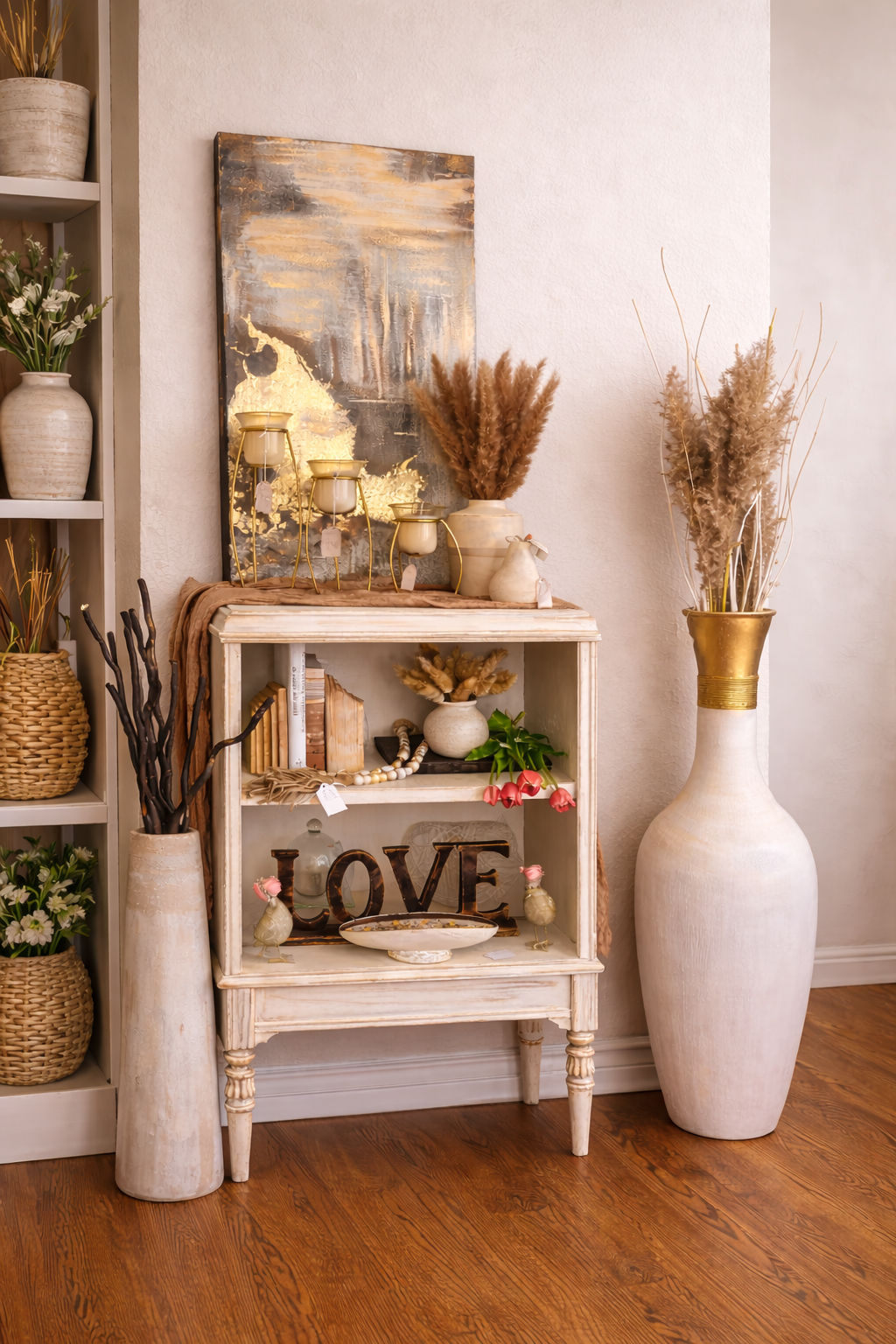
A tall decorative vase provides an elegant middle ground.
It occupies relatively little floor space while introducing height and visual interest.
Depending on the room, it can be displayed alone or styled with branches, dried botanicals, or greenery.
A substantial floor vase can work particularly well beside a fireplace, console, media unit, staircase, or window.
It is a relatively simple detail that can completely change the balance of the room.
Lamps Are Decor Too
Lighting should never be considered only from a practical perspective.
The lamp itself contributes to the room during the day, while the light it produces changes the atmosphere at night.
A sculptural table lamp can make a simple console more interesting. A floor lamp can bring height to an empty corner. Matching bedside lamps can create subtle balance in a bedroom.
Then there is the warmth of the light itself.
Soft illumination can make textiles look richer, wood feel warmer, and neutral colors appear more inviting.
Especially during Ottawa’s darker months, layered lighting can make an enormous difference to how comfortable a home feels.
The Right Mirror Can Transform a Wall
A mirror is one of those rare decorative pieces that can make a space both more beautiful and more functional.
Placed thoughtfully, mirrors can reflect natural light and create a greater sense of depth.
In smaller Vanier interiors, that can be especially valuable.
But size and shape matter.
A large mirror can create a much stronger impact than several smaller decorations scattered across the same wall.
Curved or rounded mirrors can also soften interiors dominated by rectangular furniture, windows, and artwork.
A mirror does not simply fill an empty wall.
It can completely change how that wall interacts with the rest of the room.
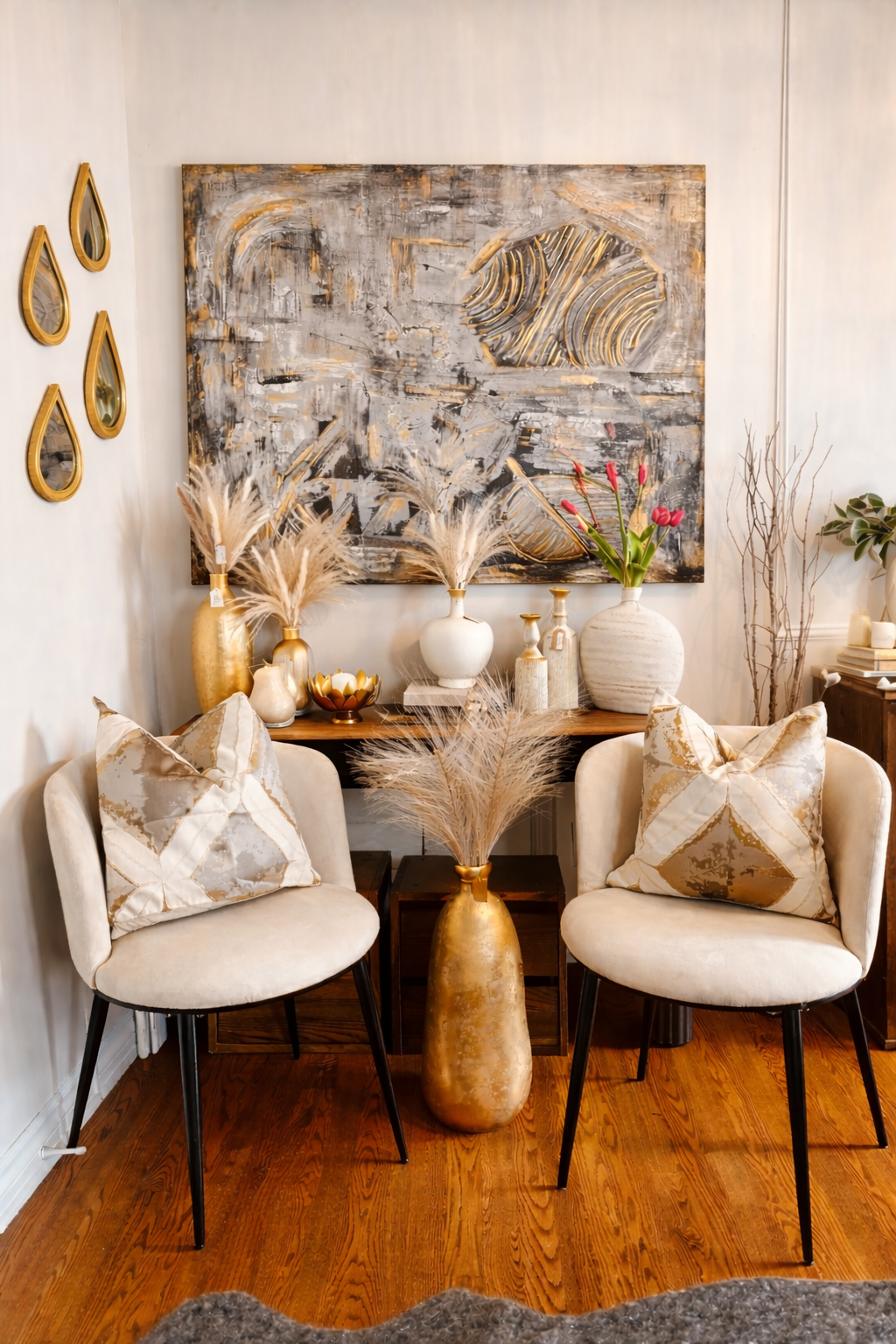
Cushions Can Tie an Entire Room Together
Decorative cushions may be relatively small, but they can connect several parts of a room.
Imagine a neutral sofa with artwork containing subtle shades of olive, beige, and brown. Introducing cushions with similar tones can create a visual relationship between the artwork and furniture.
The room suddenly feels more cohesive.
Texture is equally important.
Combining smooth fabric with linen, woven, or softly textured cushions creates depth without requiring dramatic color.
There is no need to cover every sofa with cushions.
A few thoughtfully selected pieces can make a much stronger impression.
Throws Make a Room Feel Lived In
A beautiful home should not feel untouchable.
Throws introduce softness and help create that relaxed, lived-in quality many homeowners want.
A textured throw draped over the corner of a sofa or folded across an accent chair adds warmth without looking overly arranged.
During colder months, it also serves a practical purpose.
The best decorative details often combine function with appearance, and throws are a perfect example.
Coffee Table Styling Creates a Small Moment
Coffee tables naturally attract attention because of their central position within many living rooms.
Yet they are frequently either left completely empty or covered with too many unrelated items.
A small, balanced arrangement is usually enough.
Consider combining a decorative tray with a sculptural object, candle, vase, or a few books.
Varying the heights creates interest.
The tray can also visually contain smaller items, preventing the table from appearing cluttered.
Most importantly, leave enough empty surface for the table to remain useful.
Good styling should support everyday living rather than interfere with it.
Decorative Bowls Are Surprisingly Versatile
Decorative bowls can work throughout almost every room in the home.
They can sit on:
- Coffee tables
- Dining tables
- Kitchen islands
- Entryway consoles
- Shelving
- Sideboards
Their shape naturally introduces contrast against the straight lines found in furniture.
Depending on the material, a bowl can also add ceramic, wood, glass, stone-inspired texture, or metallic detail to the room.
Some pieces are beautiful enough to remain completely empty.
That simplicity can actually make them more noticeable.
Books Add More Than Something to Read
Books are useful styling elements because they add height, color, and personality.
A small stack can create a base beneath a decorative object on a coffee table or console.
Books can also help shelves feel more personal.
Rather than selecting books purely for appearance, homeowners can display titles they genuinely enjoy. This prevents the home from feeling artificially decorated.
Personal interests should have a place within beautiful interiors.
They are part of what gives a home character.
Artwork Should Feel Connected to the Furniture
Artwork can completely transform an interior, but placement is just as important as the piece itself.
One common issue is hanging artwork too high or choosing something too small for the furniture underneath it.
Artwork above a sofa, bed, or console should feel visually connected to that furniture.
A larger piece often creates stronger impact and can make the entire room feel more complete.
Artwork can also introduce colors that are repeated elsewhere through cushions, rugs, ceramics, or other decorative details.
Those subtle connections help bring the room together.
Window Treatments Add Softness
Curtains do much more than provide privacy.
They soften hard architectural lines and introduce another layer of texture.
Long curtains can also draw the eye upward, creating a greater sense of height.
Rather than treating window coverings as an afterthought, homeowners can consider how the fabric, length, and color contribute to the room.
Soft neutral curtains work particularly well when the goal is to create a calm interior without distracting from furniture or artwork.
Hardware Can Quietly Update a Room
Not every decorating improvement needs to involve adding something new.
Sometimes changing a small existing feature makes the difference.
Cabinet handles, drawer pulls, and door hardware may occupy very little visual space individually, but they repeat throughout the room.
That repetition gives them influence.
Updating hardware can subtly change the appearance of kitchens, bathrooms, furniture, and storage without requiring a major redesign.
The effect is understated but noticeable.
Greenery Makes Rooms Feel Alive
Plants and greenery introduce something that decorative objects cannot fully replicate: organic movement.
A tall plant can soften an empty corner.
A smaller plant can add freshness to shelving or a console.
Branches placed in a large vase can create dramatic height without taking up much room.
Green also works beautifully alongside neutral palettes, natural wood, cream, beige, brown, and earthy colors.
Homeowners do not need plants everywhere.
One well-positioned piece of greenery can be enough.
Scent Contributes to the Experience of a Home
Decorating is usually discussed visually, but people experience homes through more than sight.
Scent can influence the atmosphere immediately.
Candles and subtle home fragrances can create another layer of comfort, particularly in entryways and living areas.
The key is restraint.
A gentle fragrance can make a room feel welcoming without becoming overwhelming.
The most effective home details are often the ones people experience without consciously noticing why the room feels so pleasant.
Rugs Help Furniture Feel Connected
A rug can make the difference between furniture that looks scattered and a seating arrangement that feels intentional.
In living rooms, a properly proportioned rug helps visually connect the sofa, chairs, and coffee table.
It also introduces softness beneath the furniture.
Texture can be especially effective in neutral interiors where homeowners want additional visual interest without adding more color.
A rug should feel like part of the furniture arrangement rather than a small decorative island floating in the middle of the floor.
Mixing Shapes Makes Interiors More Interesting
Take a look around almost any room and there will probably be a lot of rectangles.
Windows are rectangular. Televisions are rectangular. Sofas, tables, artwork, rugs, shelving, and cabinets often follow similar lines.
Introducing curved shapes provides contrast.
This can be accomplished through:
- Round mirrors
- Sculptural vases
- Curved lamps
- Decorative bowls
- Rounded tables
- Organic accessories
The change can be subtle, but it prevents a room from feeling too rigid.
Repetition Creates Cohesion
Beautiful interiors often repeat certain elements without making the repetition obvious.
A warm wood tone might appear in a coffee table, picture frame, and decorative tray.
Black might appear in a mirror frame, lamp, and small accessory.
An olive shade might be present in artwork, cushions, and greenery.
These repetitions create relationships between different parts of the room.
Everything does not need to match.
It simply needs to feel connected.
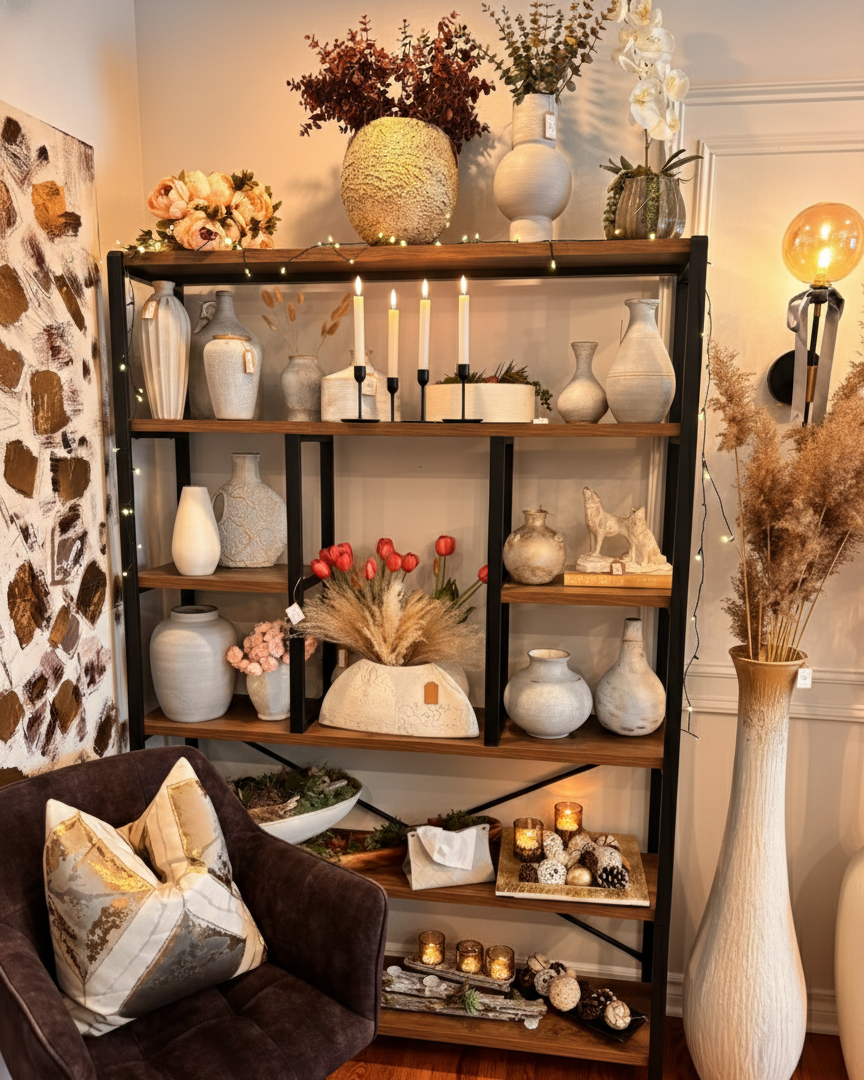
Styling Shelves Requires Restraint
Shelves offer plenty of opportunities for personality, but they can quickly become visually overwhelming.
Rather than filling every space, create smaller arrangements.
Books can sit beside ceramics. A framed photograph can be paired with a decorative object. A sculptural vase can stand alone.
Then leave some space empty.
Negative space allows the objects that are displayed to become more noticeable.
It also makes the entire shelving arrangement feel calmer.
Nightstands Don’t Need Much
Bedrooms benefit from simplicity.
A nightstand usually does not need a large collection of decorative accessories.
A lamp, book, and one small decorative object may be enough.
Keeping these surfaces relatively clear contributes to the peaceful feeling people generally want in bedrooms.
The same principle applies to dressers.
One mirror or piece of artwork combined with a small grouping of decor can create greater impact than covering the entire surface.
Dining Tables Can Look Finished Between Meals
Dining tables often become large empty surfaces when they are not being used.
A simple centerpiece can give the room a finished appearance.
Consider:
- A large ceramic bowl
- A sculptural vase
- Decorative vessels
- Understated greenery
The centerpiece should complement the scale of the table while remaining practical enough for everyday life.
There is no need for an elaborate arrangement.
Sometimes one beautiful object is enough.
Personal Objects Give a Home Its Identity
A beautifully decorated room should still reveal something about the people living there.
Family photographs, travel finds, artwork, books, heirlooms, and collected pieces introduce meaning that purely decorative objects cannot provide.
These details prevent a home from feeling generic.
They also naturally develop over time.
The most interesting interiors often look collected rather than purchased all at once.
Small Changes Can Refresh a Home Seasonally
The details also make it possible to refresh a home throughout the year without constantly redecorating.
During warmer months, homeowners might introduce lighter fabrics, fresh greenery, and brighter natural textures.
During fall and winter, richer textiles, warmer lighting, deeper earthy colors, and cozy throws can create a different atmosphere.
The furniture does not need to change.
A few smaller details can shift the mood of the entire room.
Sometimes the Best Detail Is Empty Space
Decorating is not only about what gets added.
It is also about what is deliberately left alone.
An empty section of wall can make nearby artwork feel more important.
An uncluttered tabletop can make one sculptural vase stand out.
A clear corner can make a room feel larger.
Leaving space around beautiful objects gives them presence.
This is one of the simplest ways to make an interior feel more sophisticated without purchasing anything.
Know When to Stop
Finishing a room can become surprisingly difficult because there is always something else that could be added.
Another cushion.
Another vase.
Another piece of artwork.
Another object for the shelf.
Eventually, the details that were supposed to enhance the room begin competing with each other.
When a room feels comfortable, balanced, personal, and functional, it may already be complete.
Sometimes removing the final accessory creates a better result than adding it.
Creating Details That Flow Throughout the Home
Individual rooms should have personality, but the home should still feel connected.
Repeating certain materials, colors, or shapes throughout different rooms can create subtle continuity.
Perhaps natural wood appears in the entryway and living room.
Textured ceramics may appear in the dining room and kitchen.
Warm neutral textiles could continue into the bedrooms.
These small connections make moving through the home feel natural.
Each room remains distinct while still belonging to the same overall story.
Final Thoughts
The little details making a big difference in Vanier home interiors are not necessarily the most expensive or dramatic ones.
They are the thoughtful choices that make spaces feel complete.
A beautifully positioned mirror can brighten an entryway. A sculptural vase can transform an empty corner. Textured cushions can make a sofa more inviting. A warm lamp can change the atmosphere of an entire living room. Artwork, greenery, rugs, ceramics, books, and personal objects can bring personality into spaces that previously felt unfinished.
The key is intention.
A beautiful home does not need something everywhere. It needs the right things in the right places.
When those small details work together, they create something much bigger than decoration. They create a home that feels warm, personal, balanced, and genuinely enjoyable to live in.